About Calafai.
Calafai is a strategy platform. You describe a business challenge. The system researches it from multiple angles, checks the quality of its own work, verifies every source, and challenges the conclusions before you see a deliverable.
You steer it. You add context, challenge the direction, bring your judgment. What comes back is a professional working document you iterate on: present it to your team, share it with your board, or build your next quarter on it. Your expertise drives the outcome. Calafai handles the analytical heavy lifting so you can focus on the decisions that matter.
What makes it different
Most AI tools are built for questions. Strategy work isn't a question. It's a project, where competitive analysis feeds financial projections that shape a go-to-market plan. Change one assumption and three deliverables shift.
Calafai is built for that kind of work. Analysis examined from multiple angles. Sources verified and graded by reliability. Conclusions challenged before they reach you. Every deliverable arrives with honest quality assessments so you know where to trust it and where to apply your own judgment.
It doesn't think for you. It helps you think.
How it started
Calafai grew out of a simple frustration: the analytical work between a good idea and a real plan takes too long and costs too much. Most people who need it can't access it.
Calafai was designed by someone who spent fifteen years doing that work by hand. Creative agencies, the U.S. intelligence community, a decade inside one of the world's most complex global enterprises. The design decisions come from direct experience with what strategy work actually requires, and where the tools fall short.
The design philosophy comes from a principle called ground truth: don't read the process doc and assume that's how the work happens. Go observe. Understand the reality on the ground. Then build from there. That habit runs through everything Calafai does.
The name: Calafai
Cah-lah-fye
In Patagonia there's a thorny bush called the calafate that produces a small dark berry. The Tehuelche legend says that anyone who eats the fruit is destined to return.
The name has roots in a few places. Cala is what they call coves and sheltered harbors across the Mediterranean. Fai, in Italian, means you make. In Mandarin, fēi means to fly. A sheltered harbor where you build something that takes flight. And that you're destined to come back to.
Where it's going
Calafai pairs an autonomous strategy platform with direct founder involvement. The sharpest version of that is the 4-week strategic engagement: a defined problem taken from a rough brief to a decision you can act on, with Chris in the work, not on a call about it.
It's deliberately selective. Built for people who expect the same rigor they'd get from a top-tier firm, at a fraction of the time and cost.
See how the 4-week engagement worksThe Founder
Chris Langstaff
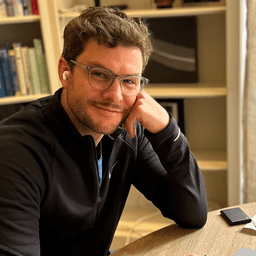
A designer with an MBA who spent a decade on enterprise and consumer digital products at Nike, and before that, built analytical software for the U.S. defense and intelligence community. Calafai is what those three trades meet.
Previously a decade at Nike. Seven years at World Headquarters in Portland, three in Europe based in-geo. Before Nike he built analytical platforms for the U.S. defense and intelligence community. Before that, creative campaigns for Discovery Communications across seven television networks.
At Nike he led service and experience design across European operations, directed design for thirteen AI and analytics product squads, and built design disciplines from zero across supply chain, demand planning, and inventory operations. His work sits at the intersection of design, technology, and business strategy. He designs the experience, writes the code, and builds the business case. Most organizations need three people for that.
He spent seven months off-grid in Patagonia and learned the hard way that the best plans survive about twenty minutes of actual weather. In the mountains and in the boardroom.
MBA, UNC Kenan-Flagler · BA, Lehigh University (Graphic Design & Political Science) · Aspen Institute Executive Leadership Seminar · Maine Media Workshops, Photography Residency · NOLS Patagonia
Bring Chris a real problem.
Not a demo request. Send the actual question you're wrestling with: a market-entry call, a strategy that needs pressure-testing, a partnership you're weighing. If it's a fit for a strategic engagement or a partnership, Chris replies personally.